
How to Stop Procrastinating When Studying

Algor Lab
October 9, 2026

Procrastination often starts before the book is even open. “Study biology” sounds like one task, but it hides dozens of decisions: which chapter, which notes, what to do first and how good the result should be. When the first step is vague, checking a message feels easier than choosing a direction.
The goal is not to become perfectly disciplined overnight. It is to make the beginning so clear and small that you can start before your mind begins negotiating.
Why studying becomes easy to postpone
A delayed study session is not always a time-management problem. Four kinds of friction commonly appear together:
- The task is too large. “Revise for the exam” has no visible finish line.
- The first action is unclear. You have files, slides and notes, but no starting point.
- The standard is too high. You feel that the first summary or mind map must already be complete.
- The reward is far away. A phone offers immediate novelty; understanding a chapter takes effort.
This is why a longer to-do list can make the problem worse. What helps is a smaller unit of work with a concrete output.
The five-minute start
1. Name an output, not a subject
Replace “study constitutional law” with “write three questions about judicial review” or “turn one page of notes into five flashcards.” A visible output removes the decision you would otherwise have to make after sitting down.
2. Make the first version deliberately small
Set a five-minute timer. Your job is not to finish the chapter. Your job is to create an imperfect first pass: one paragraph explained in your own words, one branch of a map or three retrieval questions.
If you stop after five minutes, you have still completed the agreement. If you continue, the next minutes are a bonus rather than a test of willpower.
3. Remove one source of friction
Do not redesign your entire routine. Choose one obstacle: put the phone in another place, close unrelated tabs, place the source document beside your notes, or decide the page before the session begins.
4. Start before you feel ready
Motivation often follows visible progress. Waiting for the right mood gives the task control over the schedule. Beginning with a small action gives you evidence that the task is manageable.
A concrete example: 42 biology slides
“Learn the slides on cellular respiration” encourages avoidance. A five-minute start is more specific:
- Open slides 1–5.
- Write one question: “What changes between glycolysis and the Krebs cycle?”
- Answer it without copying complete sentences.
- Mark one point you cannot explain yet.
That last mark becomes the next starting point. You no longer return to an undefined chapter; you return to a specific gap. This works well with the self-explanation study method, because the first output is an explanation rather than another passive reread. If several deadlines are competing for attention, combine it with a realistic plan for studying for multiple exams.
Turn scattered material into a small study unit
In Algor, a Set can collect the source material, editable pages, maps and study activities for one topic. Instead of reopening a folder called “Exam,” create one section for today’s target and one page for the five-minute output. The page can stay rough: it exists to remove the first decision, not to become a polished final note immediately.
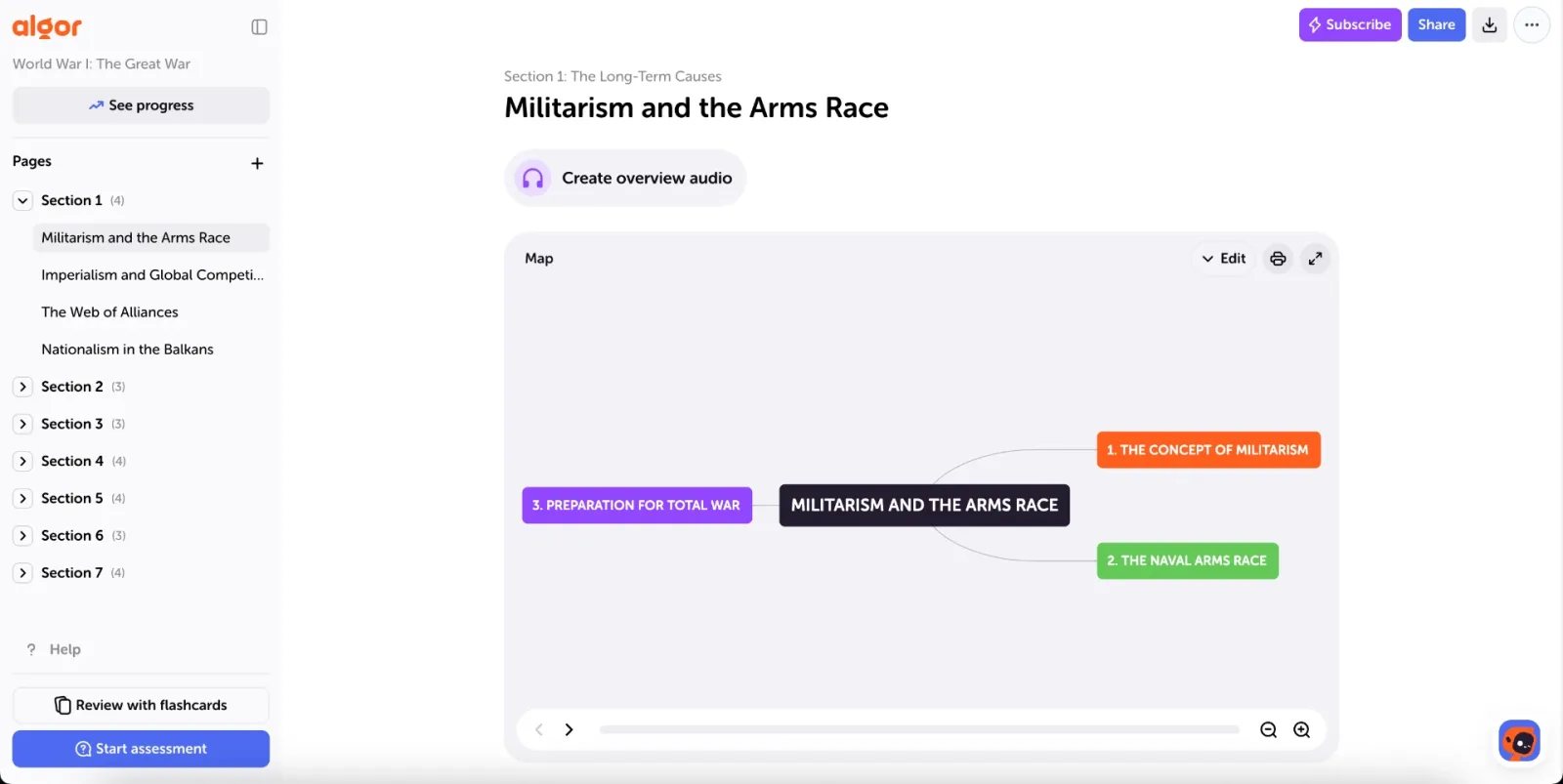
At the end of five minutes, leave one visible next action at the top of the page: “Explain the missing step,” “add one counterexample,” or “turn these three points into retrieval questions.” That breadcrumb reduces tomorrow’s starting friction.
Use the Assistant to narrow the first action
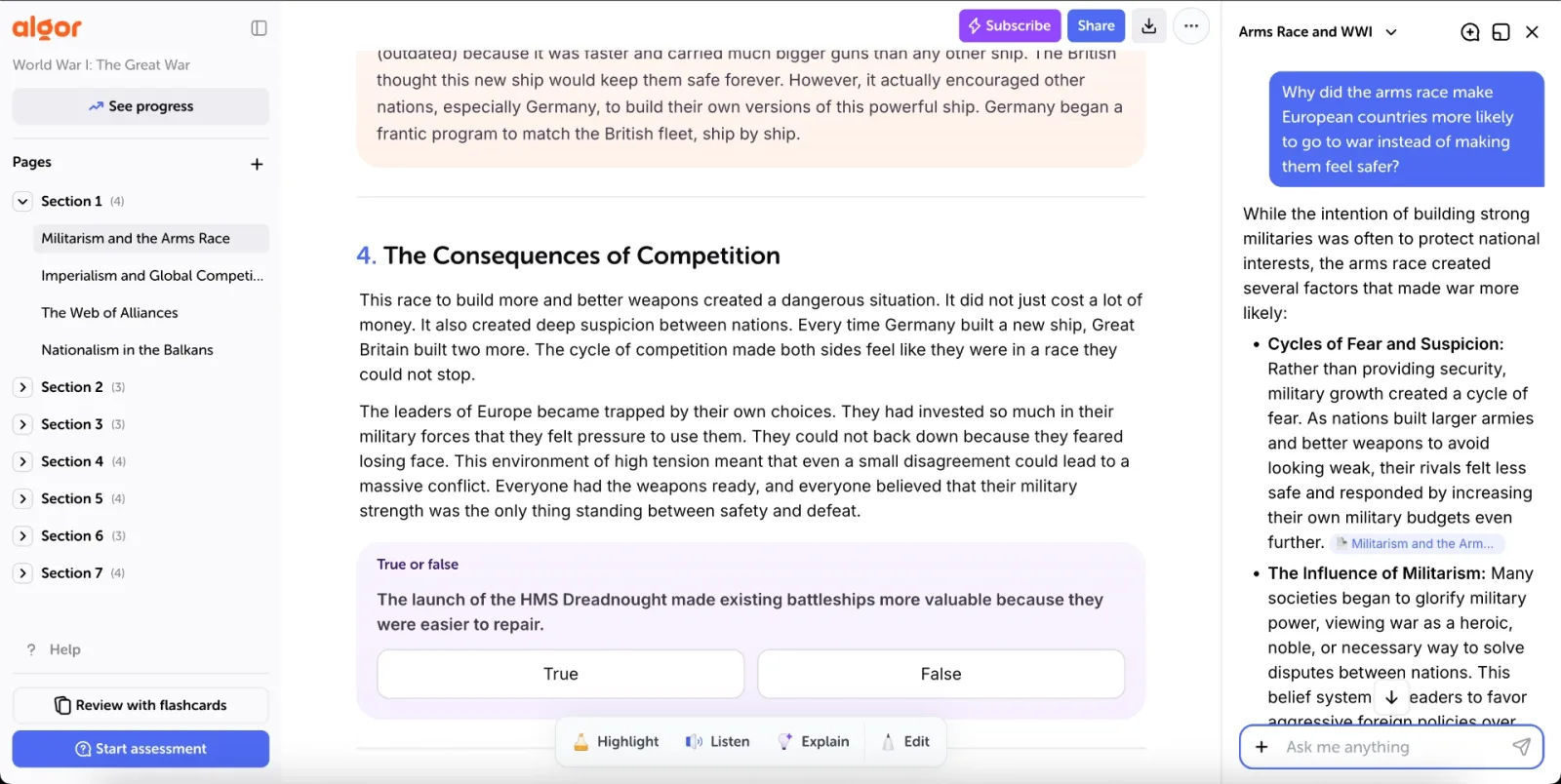
The Assistant can use the context of the Set and its sources. A useful prompt is:
Using only this Set, give me one five-minute starting task. It must produce something I can check, not just tell me to read.
Check the cited source and open the relevant card before accepting the suggestion. The Assistant reduces the decision burden; it does not decide what matters for your course.
What to do when the first five minutes do not work
Make the task smaller again. Open the file. Write the date. Copy only the heading you need to understand. If you still avoid the work, distinguish “I do not know the first action” from “I am too tired or distressed to work safely.” The first needs a smaller action; persistent exhaustion or distress deserves support from your university service or a qualified professional, not another productivity trick.
A seven-day experiment
For one week, record only three things: the output you chose, whether you started within five minutes, and the next visible action. Do not score the quality of the whole session. At the end of the week, keep the type of start that made action easiest.
The aim is not a flawless streak. It is to make returning to the work simpler than avoiding it. Once the first output exists, test it with active recall instead of rereading automatically.
Common mistakes
- Choosing a vague goal: “work on chemistry” still requires a decision. Name the output.
- Planning for five minutes instead of working: prepare the first source and action before the timer starts.
- Turning the method into a performance test: a small start is useful even when you stop after five minutes.
- Adding too many tools: remove one obstacle before changing apps, systems or schedules.
Frequently asked questions
Should I use a timer for the whole session?
Not necessarily. The timer protects the beginning. After five minutes, continue with a normal study block if useful.
Is this the Pomodoro technique?
No. Pomodoro structures work and break intervals. The five-minute start is specifically designed to reduce the friction before the first meaningful action.
What should I do after the first task?
Choose the next smallest output, check what you can recall without looking, and leave a concrete restart point.
Build one small, editable study unit on Algor Education and let the first five minutes produce something you can check.
Sources


Faq
Frequently Asked Questions



Get Started with Algor
Transform your content into structured, visual and personalized learning paths.

.svg)


