
Interleaving study method: how to mix topics and choose the right approach

Algor Lab
September 29, 2026

You finish ten questions of the same type and the last few feel almost automatic. Then the exam mixes several problem types. Before calculating anything, you must decide which method applies—and that is often where confidence disappears.
Interleaving, or interleaved practice, trains that decision. Instead of studying A, then B, then C in separate blocks, you alternate related categories: A-B-C-B-A-C. This is not random multitasking. It is a planned practice sequence in which each question requires you to recognise the problem before choosing a response.
What is interleaving?
Interleaved practice mixes similar topics or problem types that call for different strategies. Blocked practice groups many identical examples together. A maths worksheet might place every linear equation first, every quadratic equation second and every system last; an interleaved set would mix them without labels.
Blocking can help when you first learn a procedure and need to understand each step. Interleaving becomes useful once you have a basic grasp and need to learn when to use each method. A 2024 study in npj Science of Learning notes that students tend to prefer blocked practice because interleaving feels more tiring, and that a short explanation of its benefits led them to use it more.
Why it can feel worse during practice
When ten questions use the same method, the previous item has already suggested what to do next. Performance improves quickly, but part of the decision has been removed. A mixed set makes you retrieve the rule, compare it with alternatives and test whether it fits. You may work more slowly and make more mistakes during the session.
Difficulty is not automatically beneficial. If the foundations are missing, mixing may simply create confusion. Interleaving works best when the categories are familiar enough to compare. It complements explanations, worked examples and an initial period of focused practice; it does not replace them.
A practical example: mathematics
Suppose you are revising equations, systems and ratio problems. First spend a short block on each method until you can describe the essential steps. Then prepare twelve unlabelled questions in a mixed order. Before solving each one, write: “What kind of problem is this? Which clue tells me?” Only then start the calculation.
Here is how that works with three short questions:
- “Solve 3x + 5 = 20”: one unknown, one equals sign, so a linear equation (x = 5).
- “Two numbers add up to 10 and differ by 4”: two unknowns, two conditions, so a system (7 and 3).
- “3 notebooks cost €6: how much do 5 cost?”: two quantities that grow together, so a ratio problem (€10).
The typical selection error is treating the second as a single equation and stopping at x + y = 10.
When checking your work, separate calculation errors from selection errors. If you applied the wrong method correctly, the gap lies in recognition. A concept map can place conditions and procedures side by side; a mixed quiz can then test whether you choose correctly without seeing the chapter heading.
Does interleaving work in essay-based subjects?
It can, as long as it trains a meaningful distinction rather than merely changing chapters. In history, mix prompts about causes, consequences, comparison and source interpretation within one period. In literature, compare passages from related writers and identify the textual evidence behind an attribution. In biology, alternate similar processes and decide which conditions activate each one. In a classic experiment (Kornell and Bjork, 2008), people who saw paintings by several artists mixed together were later better at recognising each artist’s style in paintings they had never seen.
A useful session might begin with two guided questions from each category, continue with six mixed questions and end with a closed-book explanation. If an error reveals missing knowledge, return to the source. If it reveals confusion between familiar ideas, create a direct comparison.
How to build an interleaved study session
1. Choose three categories worth comparing
Switching between algebra, poetry and anatomy every five minutes is not necessarily interleaving. It may just fragment attention. Pick topics that answer a related question but require different responses: three verb tenses, similar biological processes, or several classes of statistical test.
2. Remove labels that give the answer away
If the heading tells you which method to use, you are not practising discrimination. Hide the source chapter and mix the order. Start small: three categories and two questions from each are enough to reveal where you hesitate.
3. Correct the decision, not only the final answer
For every error, record the clue you missed. Put two frequently confused concepts next to each other and write a question that forces you to distinguish them. In the next session, return that question to a mixed set instead of repeating it five times in a row.
Using Algor without turning the method into an automatic recipe
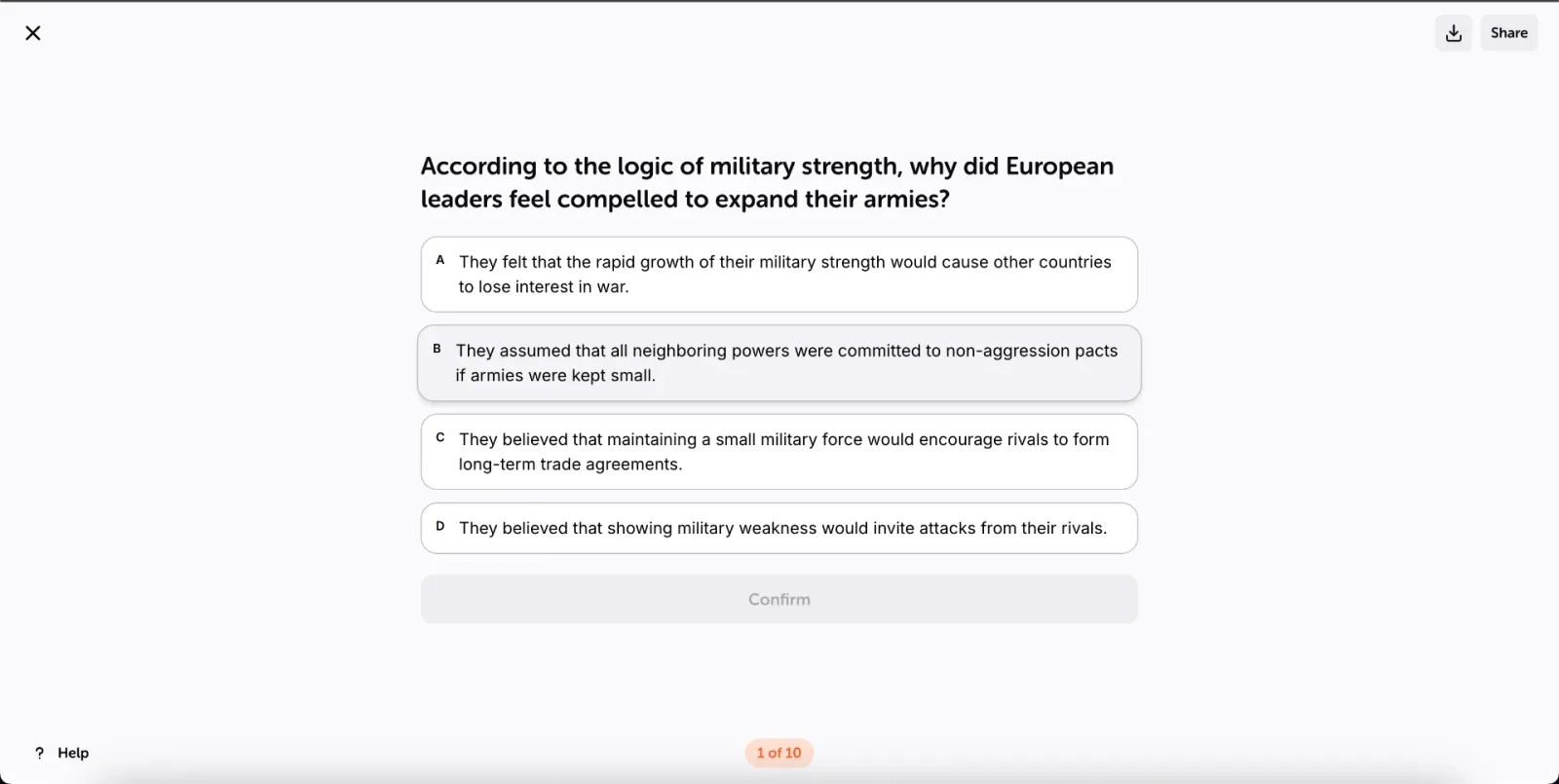
In Algor, a Set keeps your sources, editable pages and concept maps together, with flashcards and quizzes for practice. For interleaving, select material that contains related topics and practise questions from different sections. The official guide to studying and reviewing in Algor explains the available tools. You still decide which categories belong together and whether you know enough to mix them.
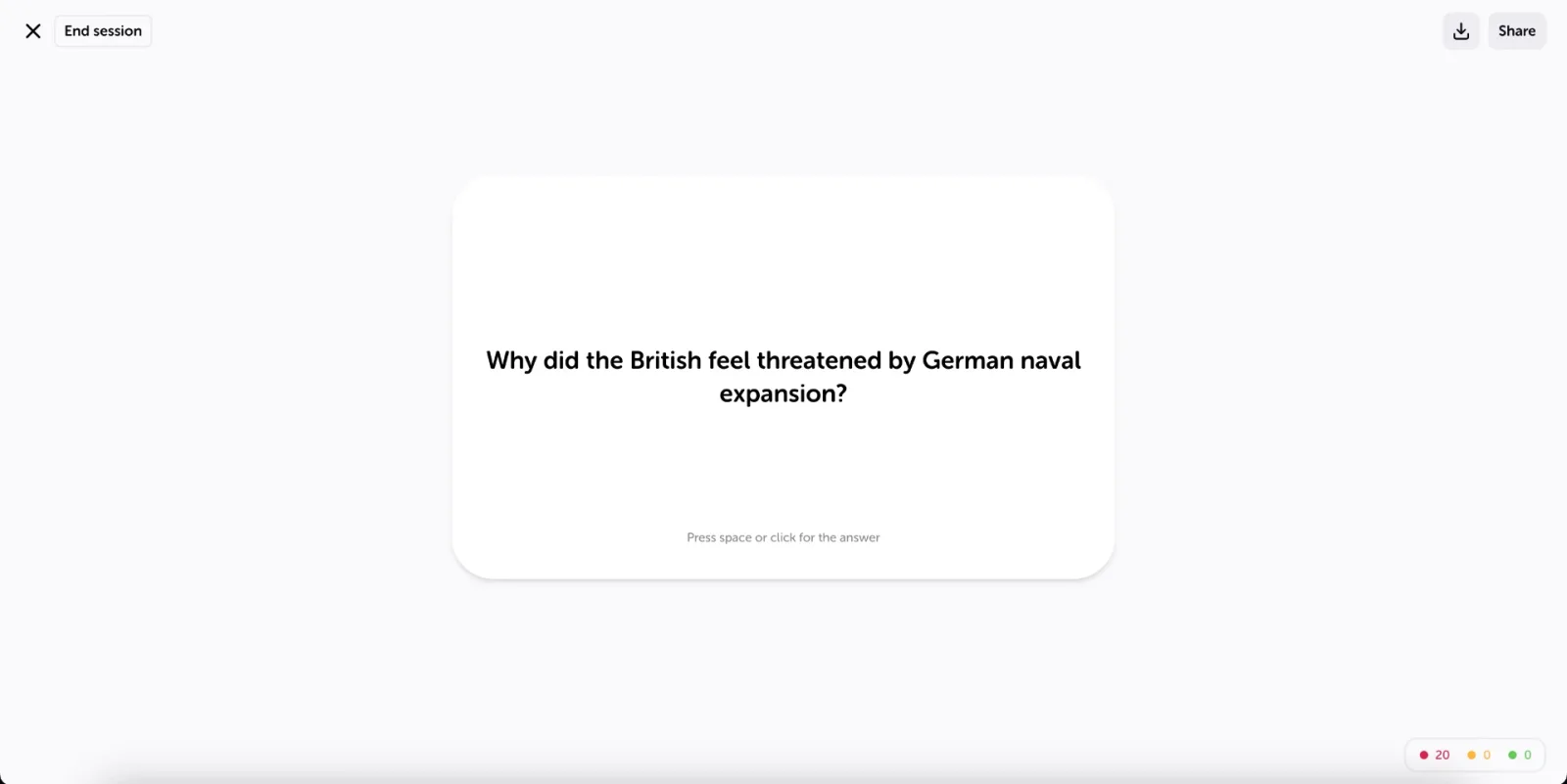
Flashcards suit definitions, relationships and short steps. For interleaving, avoid a deck ordered exactly like the textbook. Mix cards from neighbouring categories and, before revealing the answer, explain why it fits. If the task involves application, add full problems: a card cannot replace solving them.
Interleaving, active recall and spaced practice solve different problems
Active recall is about retrieving an answer from memory. Spaced practice is about when you return to material. Interleaving is about how you order related items during practice. They can work together: retrieve answers from a mixed set, then revisit the errors after an interval.
You do not need three complicated systems at once. Take a review session you already use and change only the order of some questions. If you are managing separate exam syllabuses, the guide on studying for multiple exams addresses the broader scheduling problem rather than mixing items inside one session.
When not to use interleaved practice
- At the very beginning: if you cannot yet follow a worked example, build the foundation first.
- Across unrelated material: constant subject switching may add an attention cost without training a useful choice.
- Without feedback: mixing uncorrected attempts can reinforce the wrong procedure.
- As a rigid formula: there is no universal ABC sequence for every course or exam.
Try a small experiment in your next review
Choose three question types you have already encountered. Prepare two examples of each, mix them and hide the labels. For every item, name the category and the decisive clue before answering. At the end, compare the mistakes with a blocked session. Do not ask only how many answers were correct; ask whether you became better at choosing a strategy.
You can keep sources, maps, flashcards and quizzes in the same Algor Set, editing the material whenever a distinction is unclear. Next time you open a mixed exercise sheet, name the type of each question before you solve it.
Frequently asked questions
How long should an interleaved session be?
There is no universal duration. It should be long enough to meet each category more than once and short enough to check every answer. Six or nine well-reviewed questions are more useful than a long uncorrected sequence.
Should I mix topics I have not learned yet?
No. First build a minimal representation through explanations and examples. Add the topic to the mix when you can at least describe the method and follow a worked solution.


Faq
Frequently Asked Questions

Related articles
Get Started with Algor
Transform your content into structured, visual and personalized learning paths.

.svg)


