
The blurting method: recall, check and fix the gaps

Algor Lab
You have read the page twice and highlighted the important parts. Everything looks familiar. Then someone asks you to explain it without the book, and the first sentence is harder to find than you expected. That gap between recognising a topic and producing an answer is exactly what blurting can help you examine.
The method starts with a blank page: you put your notes away, recall what you can and compare it with the source. This guide shows you how to make that comparison useful. We will work through a biology example, decide what different gaps mean and turn them into a next task. You will have a short routine you can try on one topic, without needing an elaborate set of revision materials.
What counts as blurting?
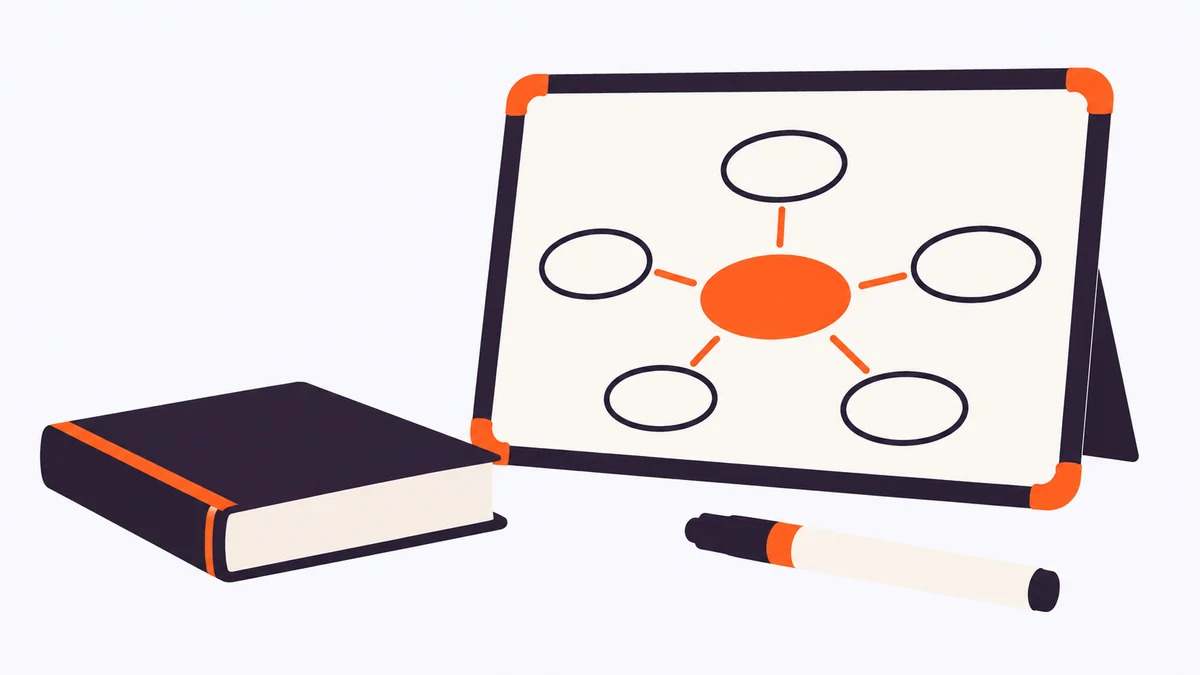
You might use a sheet of paper, a small whiteboard or a blank document. Choose a topic you have already studied and recall its key ideas without copying. The result can be sentences, a rough diagram or a set of connected points.
The label is common in revision advice, including this sixth-form study guide from Furze Platt. The broader research concerns retrieval practice and spacing, discussed in the review by Carpenter, Pan and Butler. That research should not be treated as proof that one branded version of blurting is best for every student or subject.
Choose a topic small enough to finish thinking about
“Biology” gives you very little direction when you face an empty page. “How do substances cross a cell membrane?” suggests a set of relationships you can try to explain. The scope matters because a focused attempt is easier to compare with a source and easier to act on afterwards.
Choose something you have already encountered in your course. If the whole explanation is new, read and work through it first. You are looking for a chance to retrieve knowledge, so there needs to be some knowledge to retrieve.
Before closing the notes, decide what an adequate answer would contain. For membrane transport, that could include the relevant processes, what moves and the distinctions your course expects. You do not need to memorise a checklist first; you need a question clear enough that your later comparison will tell you something specific.
A practical five-step session
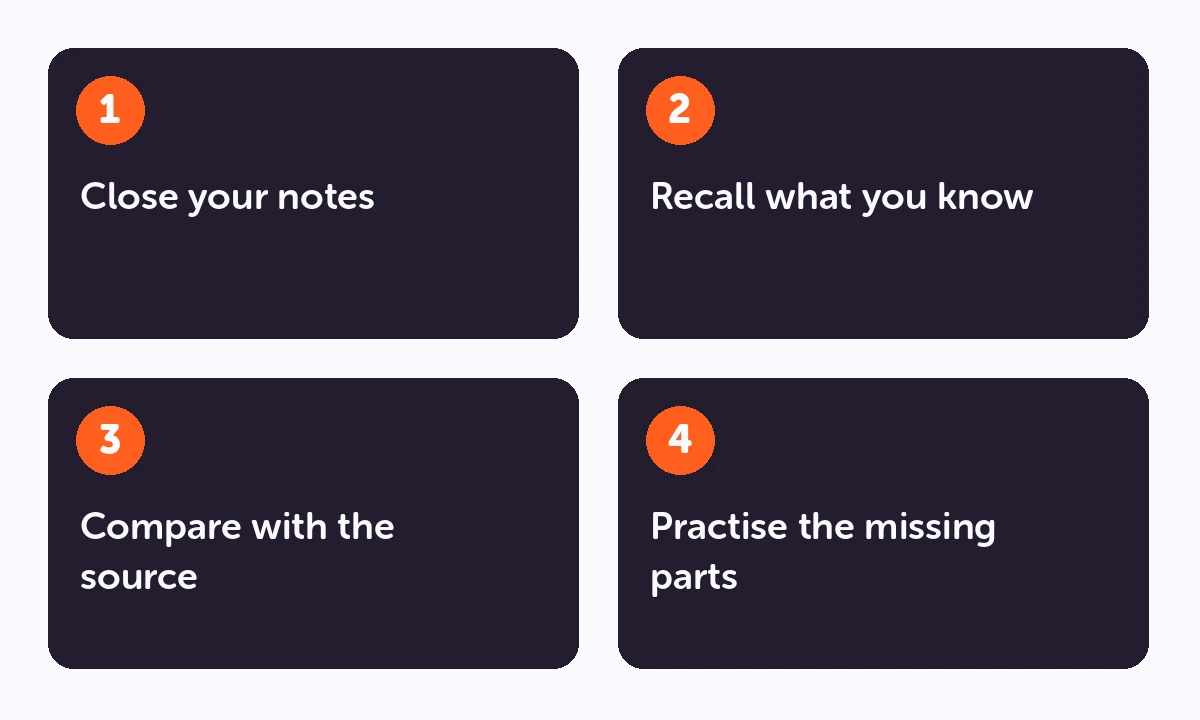
- Choose a manageable question. “What affects the rate of this reaction?” is more focused than “Everything in chemistry”. Use a topic relevant to your course.
- Put the source away. If the material is entirely new, study it first. A blank page is not a substitute for an initial explanation.
- Recall what you can. Write relationships, examples and steps, not just isolated keywords. Leave a visible gap where you are unsure rather than inventing an answer.
- Compare and correct. Open the source and distinguish missing information from incorrect information. Check whether the relationships make sense, not only whether the words match.
- Choose the next task. Turn one important gap into a question or exercise and revisit it in a later session.
You can set a short time limit to keep the session focused, but there is no special number of minutes that makes the method work. Stop when you have made a genuine attempt, then use the comparison to guide your next step.
Example: revising a biology topic
Suppose you have studied transport across cell membranes. On a blank page, write how diffusion, osmosis and active transport differ. Include what moves, what drives the process and whether energy is required in the explanation you have learned.
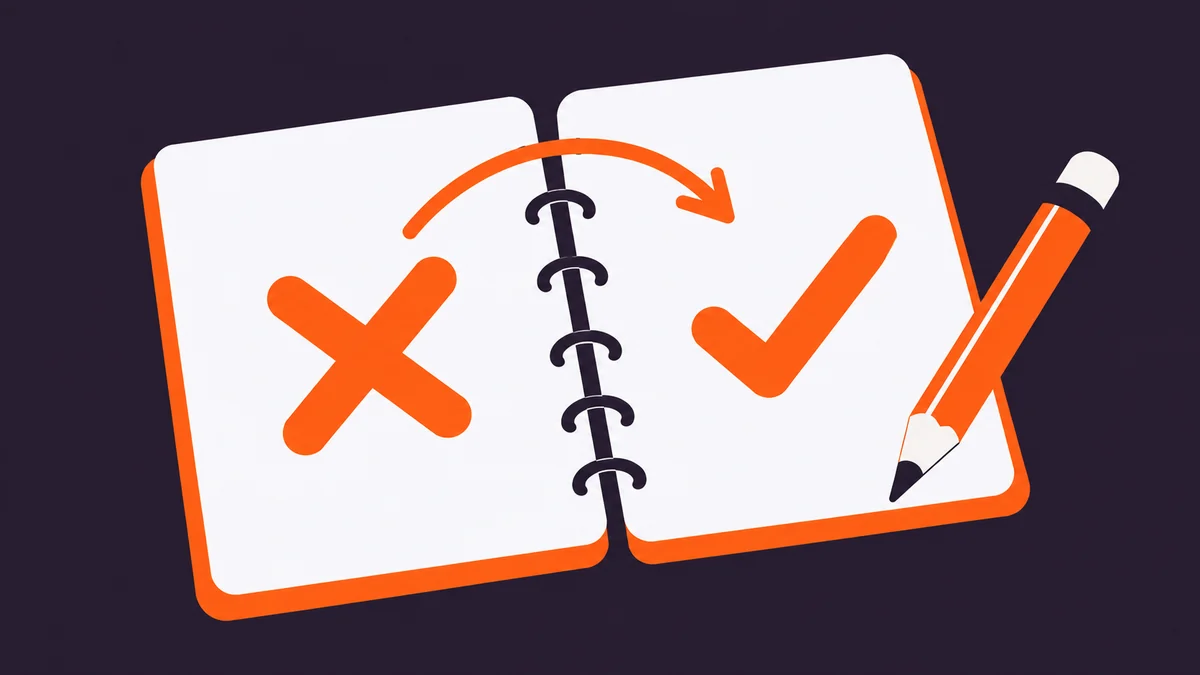
Now compare your page with the course material. Perhaps you remembered the names but mixed up two mechanisms. Your next task is not to copy the whole chapter. Write a question that targets the distinction and answer it later without looking.
Replace the topic with the content and terminology used in your own course.
What a useful comparison looks like
Imagine that your first page contains the names of three processes and a few arrows. You have written that diffusion moves particles down a concentration gradient. You mention water under osmosis but do not explain the membrane's role. Your description of active transport repeats the sentence about diffusion.
Check those statements against your course. The OpenStax explanations of passive transport and active transport provide another reference for these distinctions. At this level, you would expect to distinguish movement down a concentration gradient from active transport against it, which requires energy. For osmosis, restore the explanation involving water and a partially permeable membrane, using the terminology your course requires. The problem is now visible: you knew several names but had not kept the distinctions clear.
Create a follow-up question that asks you to compare the processes, rather than another card asking only for their names. Then try an application from the course. The correction has led to a new task that tests the weak relationship. Your original page can stay untidy; it has already shown you where to work.
Keep the correction simple
| What you notice | What to do next |
|---|---|
| A key fact is missing | Create a focused recall question |
| Two concepts are confused | Compare them using one clear example |
| A process has no explanation | Reconstruct its steps and explain the links |
| You know the words but cannot apply them | Solve a new problem or analyse a new example |
Colour coding can make the correction easy to see, but you do not need a complicated system. Avoid spending more time decorating the page than checking the reasoning.
Use Algor after the recall attempt
Algor Education can organise your material into a Set. Keep that material closed while you make your first recall attempt, then use it as one reference for checking, alongside the original course source.
For gaps that need another attempt, use flashcards or a focused assessment on the relevant part of the Set. The study guide explains these options. Check generated explanations against your source, particularly when a detail is unfamiliar or seems inconsistent.
When blurting is not enough
For mathematics, remembering formulas does not replace working through problems. For an essay subject, a list of facts does not show that you can develop an argument. Use blurting to identify knowledge gaps, then practise the task your assessment actually requires.
Notice what a full page cannot tell you
A long response may still miss the point of a question. If the task asks why something happens, a list of relevant terms is only a starting point. Add the causal links and check them against the source. If it asks you to calculate or evaluate, you will need to practise those actions too.
Equally, a short response is not automatically a poor one. You may have selected the essential relationships clearly. Compare the answer with the requirements, rather than with the amount of writing someone else produced.
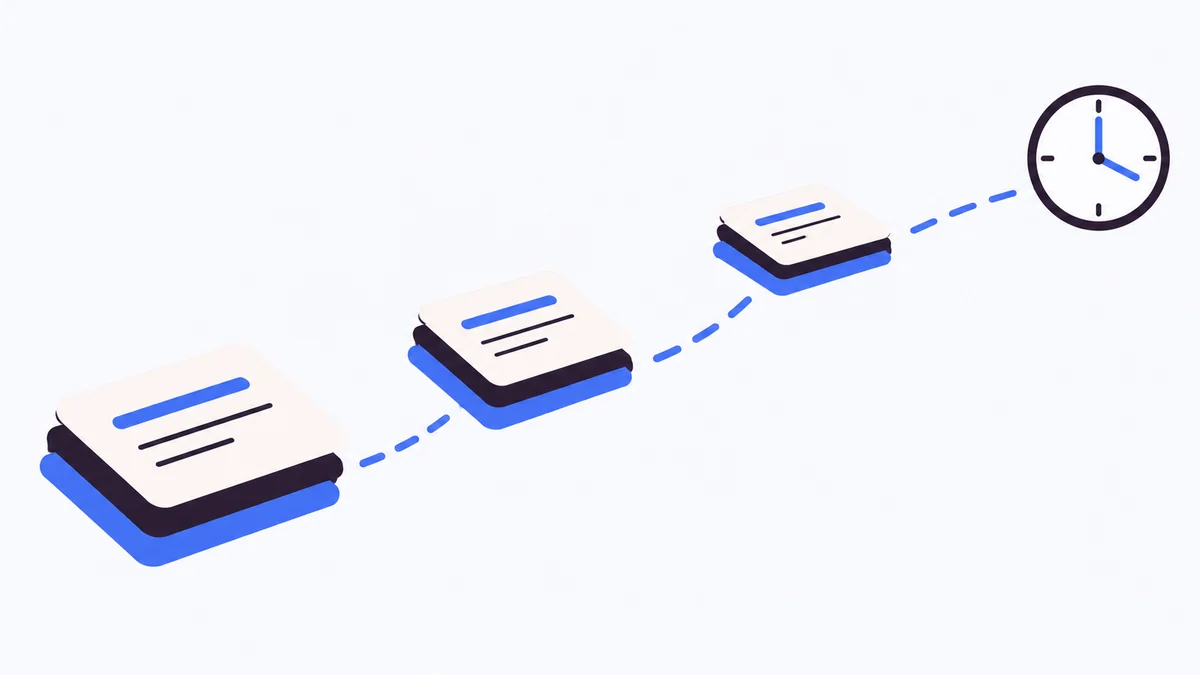
For a second attempt, change the question slightly. You might move from listing membrane processes to explaining which process fits a particular example. This helps you see whether the correction has become usable knowledge. Reproducing the same page immediately can make it hard to separate understanding from remembering what you just wrote.
Try one page before redesigning your revision
Choose a topic, close the source and make an honest attempt. Mark one important gap, work on it and decide when you will try again. You do not need to turn every subject into a blurting routine. Keep the method where it gives you a clearer next step, and use the appropriate exercises when your assessment asks for something the blank page cannot test.
Frequently asked questions
Should I check notes halfway through?
For the recall attempt, keep them closed so you can see what you know unaided. If you become completely stuck, end the attempt, study the missing explanation and try again later.
Should I repeat the same page immediately?
A quick correction is useful, but schedule another attempt later too. Start with one topic in Algor Education, make a short recall attempt and let the gaps determine your next session.
Continue your revision


Faq
Frequently Asked Questions

Get Started with Algor
Transform your content into structured, visual and personalized learning paths.

.svg)


